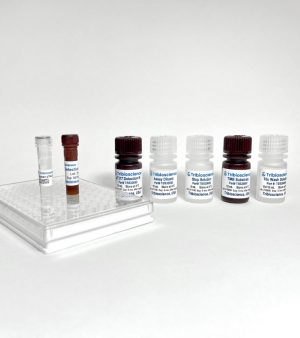
Tau Thr217 detection
ELISA (Enzyme-Linked Immunosorbent Assay) for Tau Thr217 Detection
ELISA is a widely used technique in protein detection due to its high specificity, sensitivity, and quantitative capabilities. For Tau Thr217 detection, ELISA relies on antibodies that specifically bind to the phosphorylated Thr217 site of the tau protein. These antibodies are conjugated to an enzyme, such as horseradish peroxidase (HRP), which catalyzes a colorimetric reaction to produce a measurable signal. The signal intensity is proportional to the concentration of the phosphorylated tau, allowing for precise quantification. This makes ELISA particularly effective for analyzing samples such as cerebrospinal fluid (CSF) and plasma.
Immunoassays for Tau Thr217 Detection
Immunoassays leverage antigen-antibody interactions to detect and quantify specific proteins, including Tau Thr217. In the context of Tau Thr217, immunoassays often involve the use of monoclonal antibodies that target the phosphorylated threonine residue. These antibodies can be paired with detection systems such as fluorescence, chemiluminescence, or radioisotopes to enhance sensitivity. Techniques like sandwich immunoassays are particularly popular for Tau Thr217 detection, as they use two antibodies to capture and detect the target, ensuring high specificity.
Advanced Mass Spectrometry for Tau Thr217 Detection
Mass spectrometry (MS) represents one of the most precise and comprehensive techniques for detecting and characterizing phosphorylated proteins like Tau Thr217. This approach involves the digestion of tau proteins into peptides, followed by their ionization and mass-to-charge ratio analysis. Advanced techniques such as tandem mass spectrometry (MS/MS) enable the identification of specific phosphorylation sites, including Thr217, with unparalleled accuracy. Label-free quantification or isotopic labeling can be employed to assess the relative or absolute abundance of Tau Thr217 in biological samples.