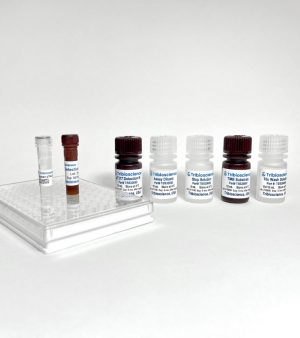
ELISA for Tau Thr217
ELISA for Tau Thr217
Enzyme-Linked Immunosorbent Assay (ELISA) targeting Tau protein phosphorylated at Tau Thr217 is a valuable tool for detecting and quantifying this biomarker in cerebrospinal fluid (CSF). CSF is in direct contact with the brain’s extracellular space, making it a highly informative medium for assessing central nervous system (CNS) biomarkers. Elevated levels of phosphorylated tau in CSF are associated with neurodegenerative conditions such as Alzheimer’s disease, reflecting tau pathology within the brain. Utilizing ELISA for Tau Thr217 in CSF samples enables clinicians and researchers to monitor disease progression, evaluate therapeutic responses, and enhance diagnostic accuracy for tauopathies.
In addition to CSF, plasma serves as a less invasive sample type for measuring Tau Thr217 using ELISA. Recent studies have demonstrated that plasma phosphorylated tau biomarkers, including those at p-tau217, can effectively reflect CNS tau pathology and aid in the diagnosis of Alzheimer’s disease. For instance, plasma p-tau217 has shown diagnostic performance comparable to its CSF counterpart, suggesting its potential utility in clinical settings. The accessibility of plasma collection facilitates repeated measurements, making it advantageous for longitudinal studies and large-scale screenings. Implementing ELISA for Tau Thr217 in plasma samples could significantly improve early detection and monitoring of neurodegenerative diseases.
Beyond CSF and plasma, other biological fluids such as saliva and urine are being explored for the detection of tau biomarkers using ELISA. While these sample types offer the advantage of non-invasive collection, the concentrations of tau proteins in these fluids are typically lower than in CSF or plasma, posing challenges for detection sensitivity. Ongoing research aims to optimize assay sensitivity and validate the clinical relevance of tau measurements in these alternative biological fluids. If successful, ELISA detection of Tau Thr217 in saliva or urine could provide convenient and accessible means for screening and monitoring neurodegenerative diseases in diverse healthcare settings.