Specificity for Thr181
Specificity for Thr181
Specificity for phosphorylation at threonine 181 (Thr181) on the tau protein is crucial for understanding various neurodegenerative conditions. Tau, a microtubule-associated protein, undergoes phosphorylation at multiple sites, including Thr181. Precise detection of tau phosphorylated at Thr181 (p-tau Thr181) allows researchers to differentiate between normal and pathological tau modifications, providing insights into disease mechanisms.
The development of antibodies that specifically recognize p-tau Thr181 has enabled accurate detection and quantification of this modification. For instance, the Phospho-Tau Thr181 (p-tau Thr181) Rabbit Monoclonal Antibody (TBS10193) from Cell Signaling Technology is designed to detect endogenous levels of tau only when phosphorylated at Thr181, ensuring high specificity in various applications such as Western blotting and immunohistochemistry. Such specificity is essential for distinguishing between phosphorylated and non-phosphorylated forms of tau, facilitating precise assessment of tau pathology in research settings.
Moreover, specificity for Thr181 phosphorylation has significant implications in biomarker development for neurodegenerative diseases. Elevated levels of p-tau Thr181 in cerebrospinal fluid and plasma have been proposed as biomarkers for certain neurodegenerative conditions, aiding in early diagnosis and monitoring disease progression. Additionally, studies have shown that p-tau Thr181 is significantly higher in extracellular vesicles derived from individuals with chronic traumatic encephalopathy (CTE) compared to controls, suggesting its potential as a diagnostic marker for CTE. Thus, specificity for Thr181 phosphorylation is pivotal in advancing diagnostic tools and therapeutic interventions for tau-related neurodegenerative disorders.
-
-
 Antibodies
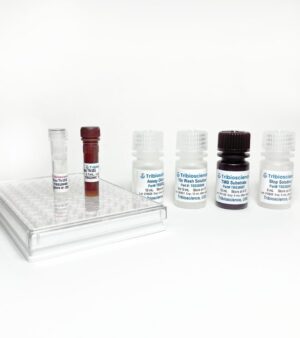
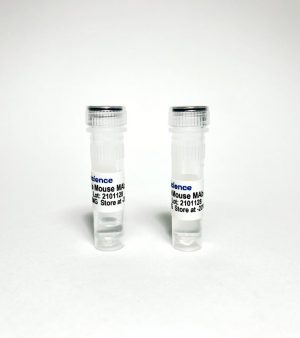
Phospho-Tau Thr181 (p-tau181) Mouse Monoclonal Antibody for ELISA, Western Blot and IHC (TBS10034)
Price range: $480.00 through $1,900.00Select optionsQuick View -
Antibodies
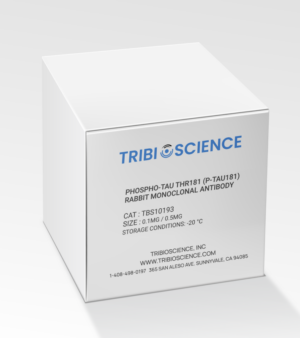
Phospho-Tau Thr181 (p-tau181) Rabbit Monoclonal Antibody for ELISA, Western Blot and IHC (TBS10193)
Price range: $450.00 through $960.00Select optionsQuick View