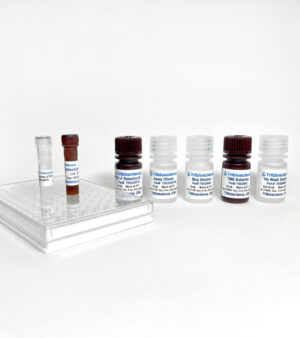
BoNT-A ELISA detection range
BoNT-A ELISA detection range
The Tribioscience BoNT-A ELISA detection range is from 46.9 to 3000 pg/mL, enabling precise quantification of Botulinum Neurotoxin Type A (BoNT-A) across a wide concentration spectrum. This extensive dynamic range supports the accurate measurement of both low- and high-concentration samples, which is critical in research and food safety applications where toxin levels can vary widely. The assay’s sensitivity allows for the reliable detection of trace toxin levels in complex biological matrices such as serum and plasma, making it an indispensable tool for early diagnosis and toxicological studies.
Botulinum Neurotoxin Type A (BoNT-A) is a highly potent neurotoxin produced by Clostridium botulinum, one of the most dangerous foodborne pathogens. Synthesized as an inactive precursor, BoNT-A undergoes proteolytic cleavage to form a biologically active two-chain protein. Once activated, it acts as a zinc-dependent protease that targets SNARE proteins essential for neurotransmitter release, ultimately leading to flaccid paralysis. The accurate detection of BoNT-A in various sample types, particularly those associated with foodborne contamination such as low-acid vegetables, meats, and seafood, is critical for both public health and food industry regulation.
Tribioscience’s BoNT-A ELISA kit utilizes a highly specific monoclonal antibody-based sandwich immunoassay format to ensure robust and consistent detection. By integrating a novel one-step detection method, this ELISA streamlines the workflow and reduces assay time compared to traditional multi-step formats. The linear response of sample measurements relative to the standard curve across the 46.9–3000 pg/mL range ensures precise quantification. This design not only simplifies the assay process but also maintains high levels of accuracy and reproducibility, enabling researchers to assess BoNT-A levels in a wide array of biological and environmental samples.