Colorimetric assay for Beta-NAG
Colorimetric assay for Beta-NAG
Colorimetric assays are widely employed for the detection and quantification of β-N-acetylglucosaminidase (Beta-NAG), an enzyme indicative of various pathological conditions, including renal disorders. The sensitivity and precision of these assays are paramount for accurate diagnosis and monitoring. Recent comparative studies have focused on evaluating different detection methods to enhance these parameters.
To enhance the sensitivity and precision of colorimetric assays for β-N-acetylglucosaminidase (Beta-NAG), the use of synthetic p-nitrophenol derivatives as substrates has been explored. In this approach, Beta-NAG catalyzes the hydrolysis of these substrates, releasing p-nitrophenol, which can be quantitatively measured by its absorbance at 405 nm. This method offers a detection sensitivity reaching as low as 50 µU of Beta-NAG activity in various biological samples, including tissues, cells, serum, and urine. The linear detection range spans from 0.05 to 50 U/L for a 30-minute reaction at 37°C, facilitating accurate quantification across a broad spectrum of enzyme activities.
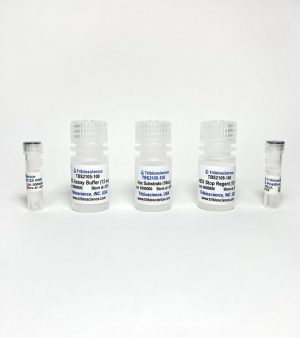
The assay’s high throughput capability allows for automation on liquid handling systems, enabling the processing of numerous samples efficiently. This is particularly advantageous in research settings where large sample volumes are common. The assay kit includes all necessary components, such as substrate, standard, positive control, stop reagent, and assay buffer, ensuring consistency and reproducibility in results. Proper sample preparation, including centrifugation and homogenization steps, is crucial to minimize variability and enhance the precision of the assay outcomes.
-
Biochemical Assays
Beta-N-Acetylglucosaminidase (Beta-NAG) Activity Colorimetric Assay (TBS2105)
Price range: $290.00 through $490.00Select optionsQuick View