Beta-NAG Standard Curve Generation
Beta-NAG Standard Curve Generation
Generating an accurate and reproducible standard curve is essential for quantifying β-N-Acetylglucosaminidase (Beta-NAG) activity in biological samples. A standard curve is constructed by plotting known concentrations of a standard—such as p-nitrophenol (pNP)—against their corresponding absorbance readings. This curve serves as a reference to determine the enzyme activity in experimental samples by comparing their absorbance values to the standard curve. To ensure precision, it is crucial to prepare fresh standard solutions for each assay, as the stability of the standard can affect the accuracy of the curve. Additionally, maintaining consistent assay conditions, including pH, temperature, and incubation times, is vital for the reliability of the standard curve and the subsequent quantification of Beta-NAG activity.
Implementing proper controls is another best practice in Beta-NAG standard curve generation. Including both positive and negative controls within each assay run allows for the monitoring of assay performance and the identification of potential issues. Positive controls, which contain a known amount of Beta-NAG activity, help verify that the assay components are functioning correctly. Negative controls, lacking the enzyme, ensure that any observed activity is due to Beta-NAG and not background interference. Regularly incorporating these controls contributes to the reproducibility and accuracy of the assay results, facilitating reliable quantification of Beta-NAG activity in various biological samples.
Data analysis is a critical component in ensuring the accuracy of Beta-NAG quantification. After measuring the absorbance of standards and samples, subtracting the blank absorbance from each reading is necessary to correct for background noise. Plotting the corrected absorbance values against the standard concentrations allows for the creation of a standard curve, typically analyzed using linear regression to determine the slope. The Beta-NAG activity in samples can then be calculated using the formula:
NAG Activity (U/L) = DF * (ODSAMPLE – OD BLANK)/ (t * Slope)
where DF is the dilution factor, OD_SAMPLE is the absorbance of the sample, OD_BLANK is the absorbance of the blank, t is the reaction time, and Slope is derived from the standard curve. Adhering to this analytical approach ensures the reproducibility and accuracy of Beta-NAG activity measurements, which is essential for reliable data interpretation in research.
-
Biochemical Assays
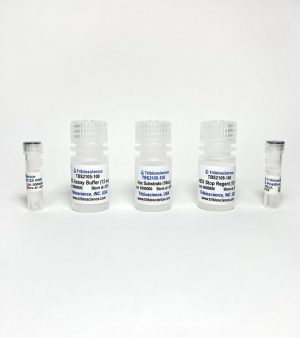
Beta-N-Acetylglucosaminidase (Beta-NAG) Activity Colorimetric Assay (TBS2105)
Price range: $290.00 through $490.00Select optionsQuick View