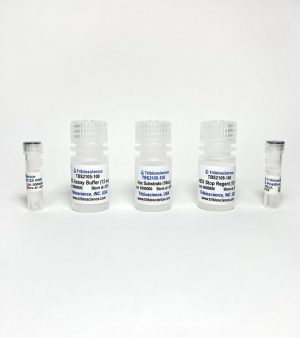
Beta-NAG Hydrolysis Measurement
Beta-NAG Hydrolysis Measurement
β-N-Acetylglucosaminidase (β-NAG), also known as β-Hexosaminidase, is a lysosomal enzyme present in various tissues, including the kidney, liver, lungs, and mast cells. Accurate measurement of β-NAG activity is essential for understanding its role in biological processes and its association with disorders such as Tay-Sachs and Sandhoff diseases, inflammation, and abnormal immune responses.
One effective technique for assessing β-NAG activity involves the use of synthetic p-nitrophenol derivatives (R-pNP) as substrates. In this method, β-NAG catalyzes the hydrolysis of R-pNP, releasing p-nitrophenol (pNP), which can be quantitatively measured by its absorbance at 405 nm. This colorimetric assay provides a simple and sensitive approach, capable of detecting as low as 50 µU of β-NAG activity in various biological samples, including tissues, cells, serum, and urine.
For accurate results, it is crucial to prepare samples appropriately and follow standardized protocols. For instance, serum and plasma samples can be assayed directly, while urine samples may require centrifugation to remove precipitates. Cell lysates should be homogenized or sonicated in cold PBS and centrifuged to obtain clear supernatants. Adhering to these preparation steps ensures the reliability of the β-NAG activity measurements, facilitating a better understanding of substrate breakdown in biological systems.
-
Biochemical Assays
Beta-N-Acetylglucosaminidase (Beta-NAG) Activity Colorimetric Assay (TBS2105)
Price range: $290.00 through $490.00Select optionsQuick View