Beta-NAG Activity in Biological Samples
Beta-NAG Activity in Biological Samples
Beta-N-acetylglucosaminidase (Beta-NAG) is an essential lysosomal enzyme involved in the degradation of glycoproteins and glycolipids, making its activity a critical biomarker in various physiological and pathological conditions. Assessing Beta-NAG activity in biological samples, such as urine, serum, and tissue extracts, provides valuable insight into conditions like renal dysfunction, liver diseases, and lysosomal storage disorders. The enzyme’s activity is typically measured using spectrophotometric or fluorometric assays, where artificial substrates like p-nitrophenyl-N-acetyl-β-D-glucosaminide are hydrolyzed to produce a detectable colorimetric or fluorescent signal. These assays offer a convenient, sensitive, and quantitative means to evaluate Beta-NAG activity, aiding in research applications.
However, the assessment of Beta-NAG activity presents several challenges that can impact the accuracy and reliability of results. Biological sample variability, including differences in pH, ionic strength, and the presence of interfering substances, can influence enzyme activity and assay performance. Additionally, enzyme stability and sample storage conditions play crucial roles in maintaining the integrity of Beta-NAG measurements. Standardization of assay protocols, including the use of appropriate controls and calibration curves, is essential to minimize variability. Moreover, researchers must carefully select assay methods tailored to the specific biological matrix being analyzed, ensuring compatibility and reproducibility across different experimental settings.
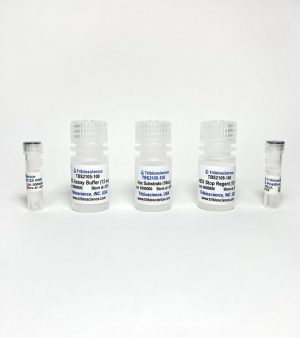
To overcome these challenges, optimized assay kits and protocols, such as those detailed in the Beta-N-Acetylglucosaminidase (Beta-NAG) Assay Kit, provide reliable solutions for measuring enzyme activity. These kits often include pre-formulated reagents and standardized procedures to enhance sensitivity, reduce assay time, and improve consistency. The use of advanced detection techniques, including fluorometric analysis, offers higher sensitivity and specificity, making it easier to detect low levels of Beta-NAG in complex biological samples. Continued advancements in assay methodologies and the integration of automation technologies will further refine Beta-NAG activity assessment, facilitating its application in biomedical research.
-
Biochemical Assays
Beta-N-Acetylglucosaminidase (Beta-NAG) Activity Colorimetric Assay (TBS2105)
Price range: $290.00 through $490.00Select optionsQuick View