Rapid ATP Measurement
Rapid ATP Measurement
Rapid ATP measurement is a powerful technique used in biological and industrial settings to quickly assess cellular activity and contamination levels. At the core of this method is the detection of adenosine triphosphate (ATP), the primary energy carrier in all living organisms. The science behind rapid ATP measurement is rooted in a bioluminescent reaction, where the enzyme luciferase catalyzes the oxidation of luciferin in the presence of ATP, resulting in the emission of light. The intensity of the emitted light is directly proportional to the amount of ATP present, allowing for real-time, quantitative analysis of biological samples. This rapid detection capability makes ATP assays particularly useful in applications where speed and sensitivity are critical, such as in microbial contamination testing and cell viability studies.
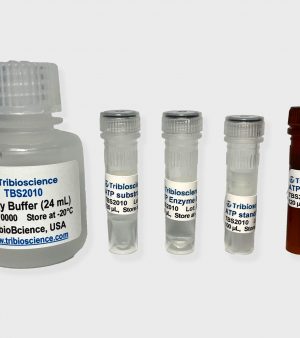
According to the technical bulletin provided by TriBioScience (source), the ATP bioluminescence assay is optimized to detect even minute amounts of ATP with high specificity and reproducibility. The assay utilizes a stabilized luciferase-luciferin reagent that produces a consistent light signal upon reaction with ATP. This signal can be measured in real time using a luminometer, allowing researchers to monitor dynamic biological processes such as cell proliferation, cytotoxicity, and apoptosis. The TriBioScience ATP assay is particularly advantageous due to its low background noise, high sensitivity (detecting as low as 10⁻¹⁵ moles of ATP), and compatibility with various sample types, including cell lysates and tissue homogenates.
One of the most significant advantages of rapid ATP measurement is its potential for real-time monitoring and on-site analysis, reducing the need for time-consuming culturing or staining techniques. In industrial hygiene, food safety, and clinical diagnostics, the ability to swiftly evaluate microbial contamination enables more responsive decision-making and improved quality control. The science behind this method, especially as refined in the TriBioScience assay, underscores its utility as a reliable and efficient tool for diverse biological analyses. As real-time monitoring becomes increasingly vital in both research and applied settings, the role of rapid ATP measurement continues to expand.