ATP Colorimetric Assay
ATP Colorimetric Assay
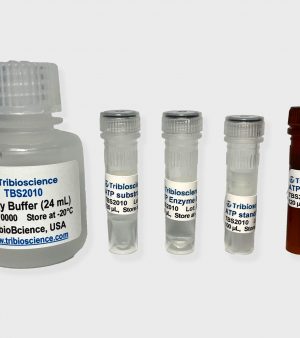
ATP Colorimetric Assays offer a robust, sensitive, and user-friendly approach for quantifying adenosine-5′-triphosphate (ATP), the primary energy molecule in cells. Tribioscience’s ATP Colorimetric and Fluorometric Assay Kit (TBS2010) exemplifies this, utilizing glycerol phosphorylation to produce a measurable product detectable via colorimetric (OD = 570 nm) or fluorometric (Ex/Em = 535/590 nm) methods. This assay can detect ATP concentrations as low as 0.5 µM, making it suitable for various biological samples. Its simplicity and high-throughput capability allow for rapid analysis, with results obtainable in less than 30 minutes using minimal sample volumes .
The versatility of ATP Colorimetric Assays extends to multiple applications in biomedical research and diagnostics. They are instrumental in assessing cell viability, as ATP levels correlate with metabolic activity, providing insights into cellular health. Additionally, these assays are employed in evaluating the activity of enzymes that produce or degrade ATP, facilitating studies in enzymology and drug development. Their sensitivity also enables the detection of microbial contamination by identifying ATP from bacterial or fungal sources, which is crucial in clinical and environmental settings
Compared to other cell viability assays, ATP Colorimetric Assays offer distinct advantages. They provide direct measurements of cellular energy status, unlike assays that rely on metabolic reactions and longer incubation times. This direct approach yields rapid results, enhancing efficiency in high-throughput screening applications. Furthermore, the non-invasive nature of these assays preserves cell integrity, allowing for subsequent analyses if needed. The combination of sensitivity, speed, and simplicity positions ATP Colorimetric Assays as a valuable tool in various research and diagnostic contexts.