How to detect Botulinum Neurotoxin Type A in biological samples
How to detect Botulinum Neurotoxin Type A in biological samples
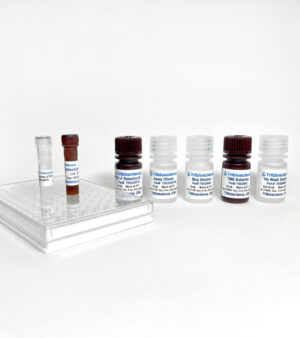
Detecting Botulinum Neurotoxin Type A (BoNT-A) in biological samples is straightforward with our specialized ELISA kit, which is designed for exceptional sensitivity and specificity without the need for labor-intensive preparation. Designed to work with serum, plasma, and other biological matrices, the kit utilizes a novel proprietary approach that combines sample handling and detection into a single step. This innovation replaces the complicated, multi-step traditional methods, making the assay simple, accurate, and fast. With a detection range of 46.9 to 3000 pg/mL, it is capable of providing reliable quantitative results for research and diagnostic applications.
The assay operates on the proven quantitative sandwich enzyme immunoassay technique. Each microplate is pre-coated with a monoclonal antibody specific to BoNT-A, ensuring high specificity in target recognition. Samples and standards are added to the wells and incubated with a biotin-conjugated detection antibody, which binds exclusively to BoNT-A. After streptavidin-HRP binding and thorough washing to remove unbound components, an ultra-sensitive TMB substrate is introduced for color development. The resulting color intensity directly correlates with BoNT-A concentration, enabling precise quantification when read at 450 nm.
Because the kit produces standard curves that are linear and parallel to sample responses, it can accurately determine relative mass values of natural BoNT-A protein. This performance ensures reproducibility and reliability across different sample types. By eliminating the need for complex pre-processing while maintaining high analytical standards, the ELISA kit streamlines the workflow for toxin detection. Whether for rapid screening or detailed quantitative analysis, it offers a powerful and efficient solution for detecting Botulinum Neurotoxin Type A in biological samples.