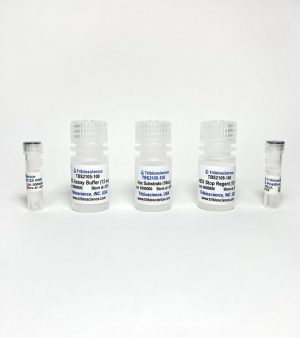
Beta-NAG Assay
Beta-NAG Assay
Optimizing Beta-N-Acetylglucosaminidase (Beta-NAG) assays is crucial for accurately quantifying enzyme activity in biological research. Beta-NAG plays a significant role in various physiological processes, including the degradation of glycoproteins and glycolipids. Precise measurement of its activity is essential for understanding its function and implications in health and disease. To achieve reliable quantification, several factors must be considered, such as substrate selection, assay conditions, and detection methods.
One critical aspect of optimizing Beta-NAG assays is the careful selection of substrates. The chosen substrate should be specific to Beta-NAG to minimize interference from other enzymatic activities. Additionally, the substrate concentration must be optimized to ensure it is within a range that accurately reflects enzyme kinetics without causing substrate inhibition. For instance, studies have demonstrated that substrate inhibition can occur at higher concentrations, leading to underestimation of enzyme activity. Therefore, determining the appropriate substrate concentration is vital for accurate measurements.
Assay conditions, including pH, temperature, and incubation time, also significantly impact the accuracy of Beta-NAG activity measurements. Enzymatic reactions are highly sensitive to pH and temperature variations; thus, maintaining optimal conditions is essential for consistent results. Moreover, the incubation time should be sufficient to allow measurable product formation but not so long that it leads to substrate depletion or product degradation. Implementing standardized protocols and utilizing appropriate controls can further enhance the reliability and reproducibility of Beta-NAG assays in biological research.
-
Biochemical Assays
Beta-N-Acetylglucosaminidase (Beta-NAG) Activity Colorimetric Assay (TBS2105)
Price range: $290.00 through $490.00Select optionsQuick View