Tryptase Enzyme Activity Assay
Tryptase Enzyme Activity Assay
The Tryptase Enzyme Activity Assay is a fundamental tool in enzymatic research, particularly in the study of mast cell activation and related allergic responses. To achieve accurate and reproducible results, it is essential to optimize various assay parameters, including pH, temperature, and substrate concentration. These conditions must closely mimic physiological environments to ensure that the enzymatic activity observed in vitro reflects in vivo behavior. For instance, selecting appropriate colorigenic substrates that release a measurable signal upon cleavage by tryptase allows for sensitive detection and quantification of enzyme activity. Such meticulous optimization enhances the assay’s reliability and relevance in studying tryptase function.
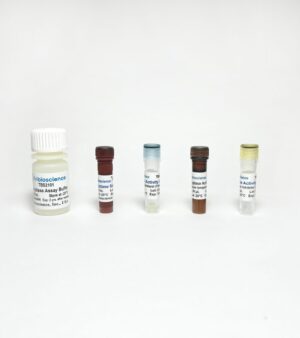
Advancements in assay technology have led to the development of highly sensitive and efficient methods for measuring tryptase activity. The Tribo™ Tryptase Activity Assay Kit exemplifies these innovations by providing a rapid and straightforward system for evaluating tryptase activity in various biological samples, including cell lysates and supernatants. This kit utilizes colorimetric detection, enabling real-time monitoring of enzymatic reactions and facilitating high-throughput screening applications. Its sensitivity allows for the detection of tryptase activity at concentrations as low as 10 μM, making it a valuable tool for research.
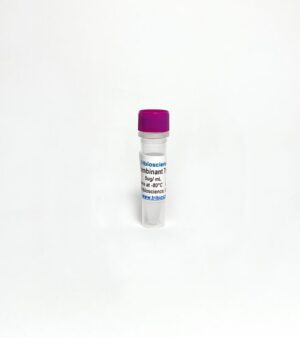
Incorporating recombinant tryptase enzymes into these assays further enhances their utility by providing consistent and well-characterized standards for calibration and comparison. Recombinant human tryptase alpha/beta-1, for example, serves as a reliable reference in activity analyses, ensuring the accuracy and reproducibility of experimental results. By combining optimized assay conditions with advanced detection methods and high-quality enzyme standards, researchers can gain deeper insights into the biochemical properties of tryptase. This comprehensive approach not only advances our understanding of mast cell biology but also aids in the development of targeted therapeutic interventions for allergic and inflammatory diseases.
-
 Protein and Peptide
Recombinant human Tryptase alpha/beta-1 protein, Enzyme Activity (TBP0099)
Price range: $210.00 through $640.00Select optionsQuick View -