Cell viability test
Cell viability test
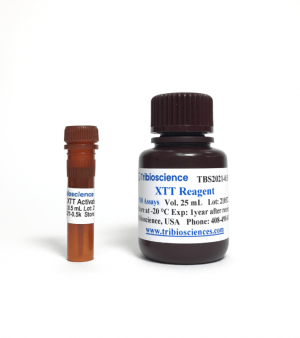
A cell viability test is a critical assay used to determine the number of living, metabolically active cells within a given population. Among the various available methods, the XTT Cell Viability Assay Kit by TribioScience offers a reliable and efficient solution. This colorimetric assay operates by utilizing the yellow tetrazolium salt, XTT, which is reduced by mitochondrial oxidoreductases—enzymes only present in viable cells—into an orange, water-soluble formazan dye. The intensity of the color, directly proportional to the number of viable cells, is quantitatively measured using absorbance at 450 nm. This makes the assay an ideal choice for researchers investigating cell proliferation, drug toxicity, and apoptotic responses.
The XTT assay kit is designed for simplicity, safety, and scalability. Unlike other methods, it does not require additional reagents, washing, or transfer steps, making it particularly suitable for high-throughput screening. The colorimetric output not only eliminates the need for radioactive labeling but also ensures accuracy, as the absorbance directly correlates with the viable cell count in each well. Applications of this assay range from analyzing the effects of growth factors, cytokines, and nutrients to screening pharmaceutical and cytotoxic compounds, including anticancer drugs.
To perform the assay, cells are seeded in a 96-well plate with a density of 1,000 to 10,000 cells per well. Following incubation, the XTT reagent is activated by mixing it with an activation reagent in a 1:50 ratio and then added to each well. After a 2–4 hour incubation at 37°C, the developed color is measured spectrophotometrically at 450 nm. The simplicity of the procedure, combined with the precision of quantifiable results, makes TribioScience’s XTT Cell Viability Assay Kit a valuable tool in both basic and applied biological research.
-
 Biochemical Assays
XTT Cell Viability Assay (TBS2021)
Price range: $98.00 through $189.00Select optionsQuick View