Cell viability analysis
Cell viability analysis
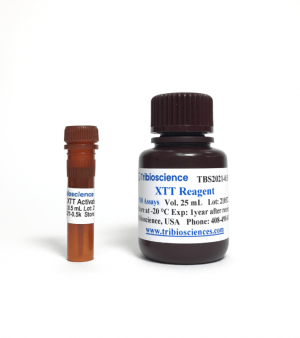
Cell viability analysis is a fundamental technique used to assess the health and metabolic activity of cells within a biological sample. This process is critical in biomedical research and drug development, where understanding how cells respond to various treatments or conditions is essential. The XTT Cell Viability Assay Kit developed by TribioScience provides a reliable, colorimetric method to evaluate cell viability based on the activity of mitochondrial enzymes that are active only in living cells. These enzymes reduce the yellow tetrazolium salt (XTT) into an orange, water-soluble formazan dye, which can be quantified by measuring absorbance at 450 nm using a spectrophotometric plate reader.
The assay involves cultivating cells in a 96-well plate, followed by the addition of a working solution composed of XTT Reagent and an Activator at a 50:1 ratio. After incubation at 37°C for 2 to 4 hours, the metabolically active cells convert XTT into formazan. The intensity of the resulting orange color directly correlates with the number of viable cells in each well, offering an accurate and sensitive measure of cell proliferation or cytotoxicity. Unlike some other viability assays, the XTT method does not require radioactive materials or additional reagents, making it a safer and simpler choice for researchers.
TribioScience’s XTT assay kit is particularly suited for high-throughput screening, as it eliminates the need for wash or cell transfer steps, reducing procedural complexity and experimental variability. It is widely applicable for evaluating cell responses to growth factors, cytokines, mitogens, and nutrient conditions, as well as for analyzing the effects of pharmaceutical compounds and cytotoxic agents, including anticancer drugs. With a shelf-life of 12 months when stored at -20°C, the kit supports diverse experimental needs in cell biology, toxicology, and pharmacology.
-
 Biochemical Assays
XTT Cell Viability Assay (TBS2021)
Price range: $98.00 through $189.00Select optionsQuick View