Insulin for islet transplantation research
Insulin for islet transplantation research
Insulin is a vital hormone responsible for regulating blood glucose levels, primarily by promoting the uptake of glucose into cells. In the context of islet transplantation research, a key area in diabetes treatment, bovine insulin has emerged as a reliable and effective tool. Its structural and functional similarities to human insulin make it a strong candidate for supporting islet cell viability and function during experimental and clinical procedures. Bovine insulin is particularly valued for its ability to act on human cells, facilitating glucose uptake and mimicking endogenous insulin activity.
The biological compatibility of bovine insulin with human cells is rooted in its highly conserved amino acid sequence. Bovine insulin differs from human insulin by only three amino acid residues, a minor variation that does not significantly impact its biological effectiveness. This close similarity enables bovine insulin to be effective in supporting human islet cells, making it an excellent growth supplement for studies. Researchers commonly use it at concentrations ranging from 1 to 10 µg/mL to promote cellular health and function in culture systems designed for islet transplantation research.
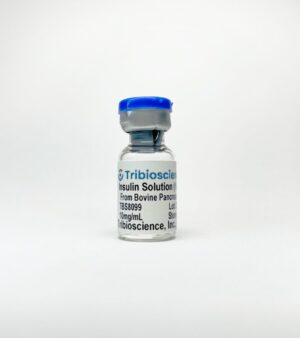
In practical applications, bovine insulin is available in a cell culture-grade formulation, typically at a concentration of 10 mg/mL in 25 mM HEPES buffer. It is offered in convenient packaging sizes such as 1 mL, 2 mL, or 5 mL per bottle, making it suitable for a variety of laboratory scales. The combination of its availability, functional compatibility, and proven efficacy underscores its role as a trusted component in islet transplantation protocols and diabetes-related cell culture studies.
-
 Cell Biology
Insulin Solution from Bovine Pancreas For Cell Culture (TBS8099)
Price range: $180.00 through $690.00Select optionsQuick View