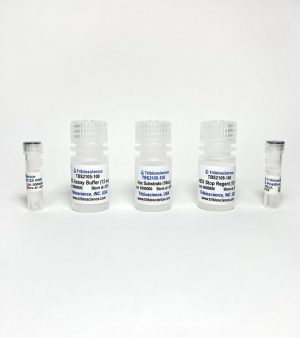
Beta-NAG fluorometric detection
Beta-NAG fluorometric detection
The Beta-NAG Fluorometric Detection Assay offers a robust and highly sensitive method for quantifying β-N-Acetylglucosaminidase (β-NAG) activity in a variety of biological samples, including tissues, cells, serum, and urine. β-NAG, also known as β-Hexosaminidase (EC 3.2.1.52), is a lysosomal enzyme implicated in several physiological and pathological processes. It is widely expressed in organs such as the kidneys, liver, lungs, and mast cells, and its elevated activity is associated with a range of disorders, including Tay-Sachs and Sandhoff diseases, as well as conditions involving inflammation and dysregulated immune responses.
This fluorometric assay utilizes 4-Methylumbelliferyl N-acetyl-β-D-glucosaminide (4-MUAG) as a non-fluorescent substrate. Upon enzymatic cleavage by β-NAG, 4-MUAG releases 4-Methylumbelliferone (4-MU), a compound that emits strong fluorescence measurable at an excitation wavelength of 365 nm and an emission wavelength of 445 nm. The assay provides a linear detection range using only 20 µL of sample for a 30-minute reaction at 37°C, making it both accurate and efficient. The kinetic-based procedure ensures high reproducibility, and the inclusion of a positive control, standard, and all necessary reagents makes the assay ready-to-use and highly reliable.
Designed with scalability in mind, the Beta-NAG Fluorometric Detection Kit is well-suited for high-throughput screening (HTS) platforms. It can be seamlessly automated for large-scale studies involving thousands of samples per day, without compromising on sensitivity or specificity. The kit is shipped on ice and should be stored at -20°C for long-term stability, with a shelf life of 12 months. By offering a rapid, straightforward workflow and consistent performance, this assay is an invaluable tool for researchers studying lysosomal function, metabolic disorders, and inflammatory conditions.
-
 Biochemical Assays
Beta-N-Acetylglucosaminidase (Beta-NAG) Activity Fluorometric Assay (TBS2105F)
Price range: $390.00 through $690.00Select optionsQuick View