Beta-NAG assay for kidney biomarker detection
Beta-NAG assay for kidney biomarker detection
β‑N‑Acetylglucosaminidase (β‑NAG; also known as β‑hexosaminidase, EC 3.2.1.52) is a lysosomal glycosidase present in multiple tissues, most notably in renal proximal tubule epithelial cells, with additional expression in liver, lungs, and mast cells. It plays a physiological role in breaking down N‑acetyl‑β‑D‑hexosamine residues, but elevated levels in biological fluids signal cellular stress or injury. Because of its large molecular size, β‑NAG is normally intracellular; when tubular cells are damaged, the enzyme is released into urine, making urinary β‑NAG (uNAG) a sensitive biomarker for kidney damage. Studies have associated elevated uNAG with acute kidney injury, chronic kidney disease (including diabetic nephropathy and IgA nephropathy), and outcomes such as dialysis requirement or mortality.
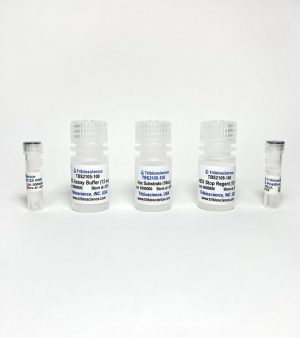
The β‑NAG Activity Fluorometric Assay employs the non‑fluorescent substrate 4‑Methylumbelliferyl N‑acetyl‑β‑D‑glucosaminide (4‑MUAG). Upon enzymatic cleavage, it releases fluorescent 4‑Methylumbelliferone (4‑MU), which can be quantitated by excitation at 365 nm and emission at 445 nm. This kinetic assay is both rapid and sensitive, detecting linear activity ranges within a 30‑minute incubation at 37 °C using just 20 µL of sample and is readily adaptable to high‑throughput screening formats for large‑scale studies. The assay kit typically includes substrate, standards, positive controls, buffer, and stop reagent, with a 12‑month shelf life at –20 °C. Its ease of use with multichannel pipetting supports consistent timing and reproducibility.
In research contexts, this assay serves as an effective tool to monitor renal function by quantifying elevated β‑NAG levels, which reflect tubulointerstitial damage. It has demonstrated utility in early detection scenarios, such as diabetic nephropathy, where rising uNAG correlates with disease severity, often before traditional markers like albuminuria become evident. Moreover, β‑NAG activity has prognostic value in acute renal failure: higher urinary enzyme levels predict worse outcomes including dialysis and death. With its robustness, automation readiness, and clinically relevant insights, the β‑NAG fluorometric assay is a powerful platform for assessing renal tubular integrity and enabling timely interventions in kidney disease.
-
 Biochemical Assays
Beta-N-Acetylglucosaminidase (Beta-NAG) Activity Fluorometric Assay (TBS2105F)
Price range: $390.00 through $690.00Select optionsQuick View