Sensitive ADP detection
Sensitive ADP detection
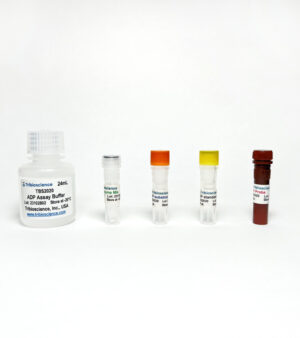
Sensitive ADP detection plays a pivotal role in monitoring subtle shifts in metabolic flux, offering researchers a window into the dynamic processes of cellular energy metabolism. The Tribioscience ADP Colorimetric/Fluorometric Assay Kit exemplifies this capability by providing a robust and straightforward method to quantify ADP levels in biological samples. This assay operates by converting ADP to ATP and pyruvate, with the resultant pyruvate being quantifiable through either colorimetric (absorbance at 570 nm) or fluorometric (excitation/emission at 530/590 nm) methods. Notably, the assay boasts a detection sensitivity as low as 1 µM, making it suitable for detecting minute changes in ADP concentrations that reflect alterations in metabolic pathways.
The high sensitivity of this assay is particularly beneficial for tracking metabolic fluxes, as ADP levels are intricately linked to the activity of enzymes involved in energy production and utilization. By accurately measuring ADP concentrations, researchers can infer the rates of ATP synthesis and hydrolysis, providing insights into the cellular energy state. This is crucial for understanding metabolic adaptations in response to various physiological and pathological stimuli, such as exercise, nutrient availability, or disease states. The assay’s compatibility with high-throughput formats further facilitates large-scale studies, enabling comprehensive analyses of metabolic fluxes across different conditions and time points.
Moreover, the assay’s simplicity and rapid protocol—requiring less than 60 minutes—allow for efficient data collection without compromising accuracy. This efficiency is essential for time-sensitive experiments where metabolic states can change rapidly. By providing a reliable and sensitive means to monitor ADP levels, the Tribioscience assay aids in elucidating the complex regulatory mechanisms governing cellular metabolism. Such insights are invaluable for advancing our understanding of metabolic diseases, developing targeted therapies, and optimizing metabolic engineering strategies in biotechnology.