ADP detection
ADP detection
Precise detection of adenosine diphosphate (ADP) is crucial for studying enzymatic reactions within bioenergetic pathways, as ADP serves as a key indicator of ATP-consuming enzyme activity. In processes such as glycolysis and oxidative phosphorylation, enzymes like kinases and ATPases catalyze the conversion of ATP to ADP, releasing energy essential for cellular functions. Accurate measurement of ADP levels allows researchers to monitor these enzymatic activities, providing insights into the kinetics and regulation of metabolic pathways. This is particularly important when investigating the effects of potential inhibitors or activators on enzyme function, as changes in ADP production can reflect alterations in enzymatic activity.
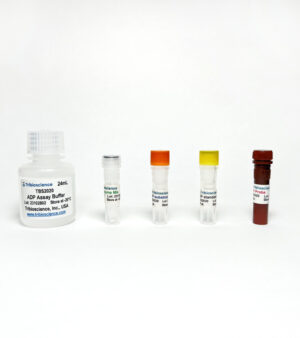
To facilitate sensitive and specific detection of ADP, Tribioscience offers the ADP Colorimetric/Fluorometric Assay Kit (TBS2020). This assay converts ADP to ATP and pyruvate, with the generated pyruvate quantified either colorimetrically (absorbance at 570 nm) or fluorometrically (excitation/emission at 530/590 nm). The kit is designed for simplicity and high-throughput adaptability, capable of detecting as low as 1 µM ADP in various biological samples. Its robust performance and ease of use make it suitable for accurately characterizing enzyme kinetics and for the discovery of novel therapeutic agents targeting ATP-dependent enzymes.
In the context of bioenergetic research, precise ADP detection facilitates a deeper understanding of metabolic fluxes and energy homeostasis within cells. By enabling accurate measurements of enzyme activities, researchers can dissect complex metabolic networks and identify potential dysregulations associated with diseases such as cancer, neurodegeneration, and metabolic disorders. Furthermore, the ability to monitor ADP levels with high sensitivity supports the development of targeted therapeutics aimed at modulating specific enzymatic steps within bioenergetic pathways, thereby offering avenues for novel treatment strategies.