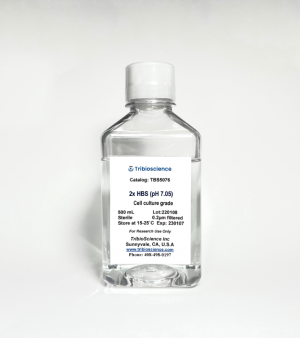
HEPES buffered saline for transfection
HEPES buffered saline for transfection
HEPES buffered saline (HBS) is a critical reagent in calcium phosphate transfection, a widely used method for introducing DNA into mammalian cells. The buffer provides a stable and controlled pH environment, which is essential for the formation of calcium phosphate, DNA precipitates. These precipitates are efficiently taken up by cells through endocytosis, enabling effective delivery of genetic material. The use of HBS ensures that the precipitation process is reproducible and consistent, both of which are necessary for achieving high transfection efficiency.
One of the main advantages of using HEPES buffered saline in calcium phosphate transfection is its ability to maintain pH stability close to physiological levels, even under conditions that might otherwise fluctuate. Since small changes in pH can dramatically alter the size and solubility of calcium phosphate, DNA complexes, the buffering capacity of HBS plays a crucial role in determining the success of the transfection. This buffering system helps create conditions in which the complexes are optimally sized for cellular uptake, thereby enhancing the chances of successful gene delivery.
Because of these properties, HEPES buffered saline is widely applied across diverse mammalian cell lines, including hard-to-transfect cell types. Researchers value its ability to promote high transfection efficiency while remaining relatively cost-effective compared to other transfection reagents. Moreover, calcium phosphate transfection using HBS is considered gentle on cells, minimizing cytotoxicity while still ensuring robust gene expression. These characteristics make HBS an indispensable component in laboratories that rely on calcium phosphate–mediated transfection for molecular biology research, protein expression studies, and gene function analyses.