Cannabis Plant Pathogen Detection Service
Cannabis Plant Pathogen Detection Service
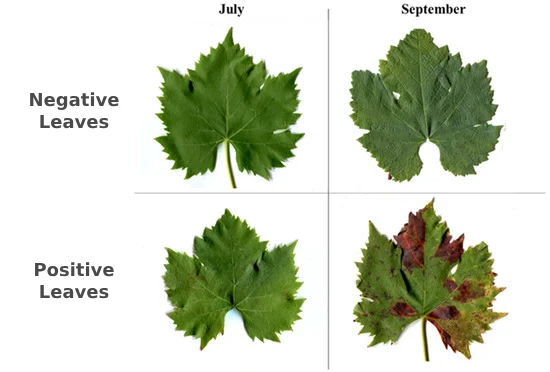
Plant pathogens can severely impact cannabis plants, reducing yields and quality. Early detection is crucial, as many pathogens spread without symptoms, causing significant damage before being visible. Cannabis plant pathogen detection services help identify these threats early and support researchers by improving experimental outcomes.
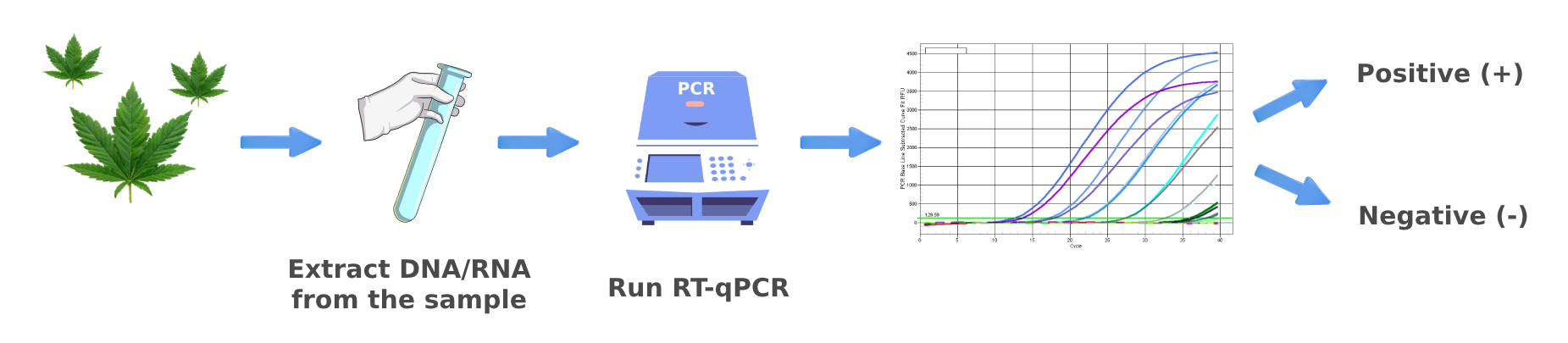
The primary method used in TribioScience cannabis plant pathogen detection services is TaqProbe qPCR. That is a highly accurate and sensitive technique that can detect even the smallest traces of DNA from pathogens. This molecular approach is particularly effective for identifying and quantifying plant pathogens in cannabis plants. Compared to traditional diagnostic methods like culturing or microscopy, TaqProbe qPCR is faster, more cost-effective, and provides rapid results. This method enables the early and precise detection of pathogens, often before any symptoms are visible.
Common pathogens affecting cannabis plants:
Fungal Pathogens:
- Botrytis cinerea (Gray Mold)
- Powdery Mildew (Golovinomyces cichoracearum, Podosphaera macularis)
- Alternaria spp. (Alternaria Leaf Spot)
- Cladosporium spp.
- Cercospora spp. (Cercospora Leaf Spot)
- Fusarium oxysporum (Fusarium Wilt)
- Fusarium solani (Root & Stem Rot)
- Pythium spp. (Damping-Off & Root Rot)
- Rhizoctonia solani (Stem & Root Rot)
- Thielaviopsis basicola (Black Root Rot)
- Colletotrichum spp. (Anthracnose)
- Sclerotinia sclerotiorum (White Mold)
- Macrophomina phaseolina (Charcoal Rot)
- Verticillium dahliae (Verticillium Wilt)
- Phoma spp.
Viral & Viroids Pathogens:
- Hop Latent Viroid (HLVd)
- Hop Stunt Viroid (HSVd)
- Tobacco Mosaic Virus (TMV)
- Lettuce Chlorosis Virus (LCV)
- Alfalfa Mosaic Virus (AMV)
- Beet Curly Top Virus (BCTV)
- Cucumber Mosaic Virus (CMV)
- Cannabis Cryptic Virus (CanCV)
- Tomato Ringspot Virus (ToRSV)
- Arabis Mosaic Virus (ArMV)
- Potato Virus Y (PVY)
- Pepino Mosaic Virus (PepMV)
- Tomato Mosaic Virus (ToMV)
- Cherry Leaf Roll Virus (CLRV)
- Soybean Dwarf Virus (SbDV)
Bacterial Pathogens:
- Pseudomonas syringae (Bacterial Leaf Spot & Blight)
- Xanthomonas campestris (Bacterial Wilt)
- Erwinia carotovora (Soft Rot)
- Ralstonia solanacearum (Southern Bacterial Wilt)
- Agrobacterium tumefaciens (Crown Gall Disease)
- Clavibacter michiganensis subsp. michiganensis (Bacterial Canker & Wilt)
- Xylella fastidiosa (Leaf Scorch Disease)
- Pantoea ananatis (Bacterial Bud Rot & Leaf Spot)
- Dickeya spp. (Soft Rot & Blackleg Disease)
- Streptomyces spp. (Common Scab-like Symptoms)
How to work with us
➀ Contact Us
Reach out to our team to discuss your specific needs for pathogen detection in your cannabis crops. We’ll guide you through the process and answer any questions you may have about the testing service.
➁ Sample Submission
Submit your cannabis plant samples to our laboratory for testing. We’ll provide detailed instructions on how to collect and send samples to ensure the best results.
➂ Testing Process
Our Cannabis plant pathogen Detection service will amplify a specific region of the pathogen genome in your plant samples. We will use target-specific fluorescent probes, labeled with FAM for the target gene, to detect the presence of Fusarium species. The amplification process will generate a fluorescent signal, which is monitored in real time to provide accurate results.
➃ Results and Consultation
Once the test is complete, we will provide you with the results, including any necessary interpretations. Our experts will be available to discuss the findings and recommend appropriate actions to prevent or manage any pathogen issues detected.
➄ Ongoing Support
We are committed to supporting you throughout the process, ensuring that you have the information and resources needed to protect the health of your cannabis plants.
Why Choose Us?
- Flexible: We offer tailored testing options to meet your specific needs, whether for one-time or ongoing testing.
- Accurate: Our TaqProbe qPCR technology ensures precise results, detecting pathogens early before symptoms appear.
- Simple: The process is straightforward, with easy instructions for sample submission and clear results.
- Timesaving: Our fast testing provides quick results, helping you address potential issues before they spread.
Email: [email protected]
Phone: +1 (408) 498-0197
Address: 365 San Aleso Ave,
Sunnyvale, CA 94085